

What Made You, Will Eventually Break You: How Getting Rewarded for Being the Wrong Person Creates a Trap You Can't Escape
Your brain, biology, and everyone around you will fight to keep you there


This is the first self-development article I’ve written for people who might be suffering from the same ego and identity issues I’ve struggled with. It’s for high achievers who either:
Want to achieve their goals without destroying themselves in the process
Have already achieved fame, money, or status—and can’t figure out why it’s ruining their life
I’ve burned out at least five times. Once, I ended up in the hospital on an operating table because stress had inflamed and shut down my entire digestive system. After that, my life hasn’t been the same, but I enjoy my life far more than before.
When you build your identity around the wrong thing, it won’t just make you unhappy—it can cost you your life.
You wouldn’t be the first. You won’t be the last.
This article is long because the issue runs deep. I went on a hunt to understand it completely and learn how to systematically build a life that doesn’t destroy me.
One of the cornerstones of advising tech companies is working with founders—understanding their mental models, how they view the world, and helping them see the blindspots that could harm them or their business.
This is a major one.
So let’s go.
SECTION 1: THE PROBLEM
This is story I have seen waaay too many times…
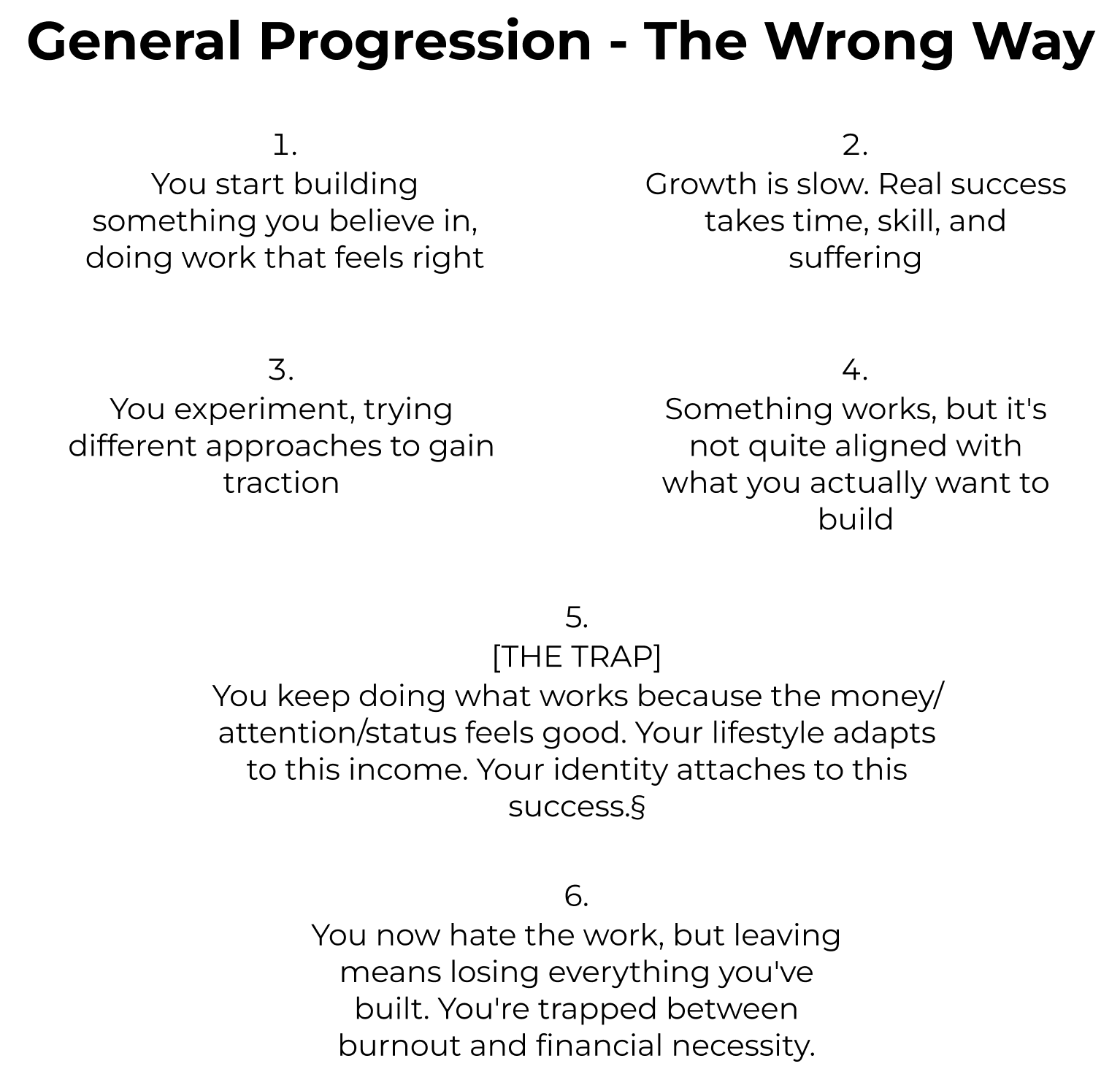
I had a beer with my barber in a Prague park after he cut my hair. Something seemed off, so I asked if everything was okay. Then I watched this incredibly talented guy explain how miserable he’d become.
Business was bad. Fewer and fewer customers. As he explained the situation, I recognized a pattern I’ve seen constantly with talented people who go out on their own:
He thought he was doing everything “right”
And hated every second of it
Thematic Instagram grids. Perfect color schemes. Every article read, every ebook bought. Copying other influencers and companies. Perfectly edited hair videos.
The results? Almost nothing. And the guy looked dead inside.
“I hate it and I don’t know what to do,” he told me.
This is the same guy who used to do hair for models and well-known companies. The same pattern I see with people who were either famous or exceptionally skilled at their craft.
They build their identity around being the best. Stop taking feedback. Stop innovating. Stop pushing to get better.
When I went through what he was doing, two major problems stood out:
First: Bad reviews and declining clients. When I asked when he last checked in with customers, he said never—a hairdresser with 20 years of experience knows hair best and had all the rational for every bad review.
Second: His content was completely generic. He’d erased his personality entirely, just copying what everyone else was doing. Every post could’ve been from any barber in any city. Zero personality. Zero perspective. Nobody gave a shit.
We spent the next hour drinking beers and mapping out what actually made him different—his unconventional techniques, strong opinions about hair products, the way he saw his work. He got excited. Started coming up with ideas that sounded like him, not like a content template.
But he never truly committed to talking with customers or reinventing his approach.
Things improved briefly. Then got worse. He slipped back into the same patterns—chasing what worked for others instead of building from what was real for him.
Eventually, he closed the shop.
His story isn’t unique.
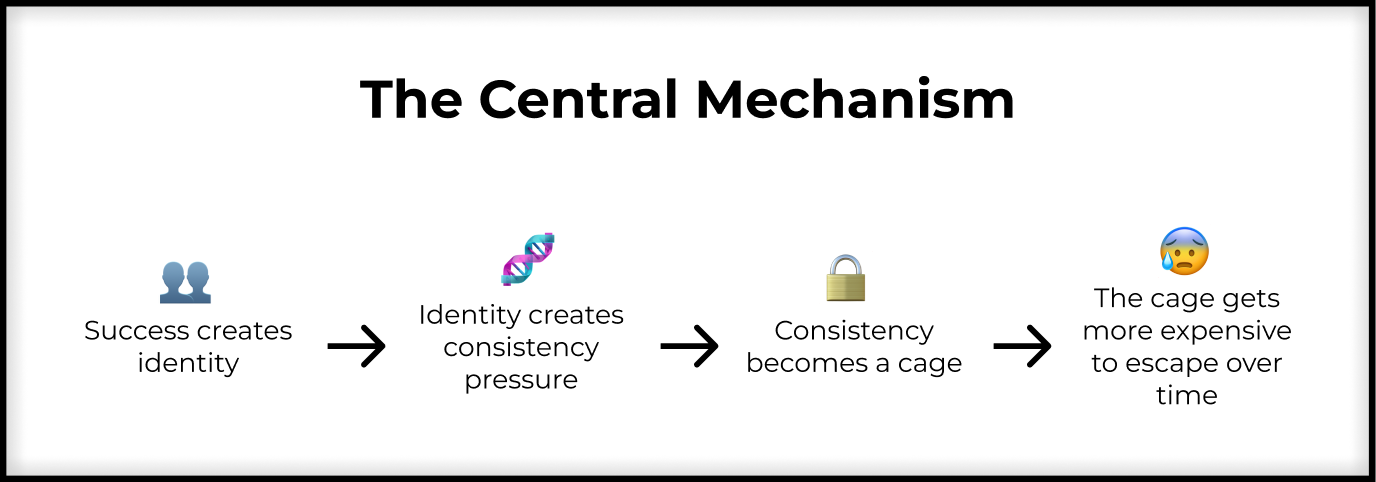
The Pattern Is Everywhere
You know people like this. Probably more than you want to admit.
People who can land jobs but can’t stay in them.
Who can build projects to a certain scale, then watch every attempt at growth fail.
Who can attract partners but can’t keep them.
Smart people crushing it in corporate roles who implode the moment they start their own thing.
Or worse: people who have success but hate what they do.
Followers and attention, but feel empty despite the audience.
Rich but miserable.
Picture-perfect Instagram relationships with broken souls behind the camera.
I see it constantly. One friend wants to build an app for models in Dubai, from Slovakia, while running a repair shop. Another is launching an AI consulting business despite working at a savings bank and never shipping anything. A girl I know is building “her new app,” but can’t explain what problem or need she is actually addressing.

I’m not saying people shouldn’t try. I’m saying everyone is chasing trends instead of building from their actual strengths and experience. They’re optimizing for what looks successful rather than what they’re capable of sustaining.
And that’s why most of them will end up, best case, successful but miserable.
Where The Society Is Now
How many of you know people who had quality content or normal pictures, but then started posting more and more ridiculous stuff?
For example, these girls figured out that they can play NPC (non-playable character) on TikTok—meaning if you pay for a certain emoji, the girl does it but in a sexy way.


Or food influencers who are literally dying at a very young age because of this game.

The most common example I’ve started seeing is with younger girls that I even follow, who had normal pictures on Instagram, posted something more exposed, got lots of attention, and then started posting more sexualized pictures, which usually escalates to plastic surgery and losing the respect of normal men. I’ve seen it way too many times. And then saying, “Where are all the good men?”
But make no mistake, this isn’t relevant to just famous influencers. This is relevant to any creator whatsoever. It’s relevant for everyone creating any content. And everyone should create content in today’s age.
It can go as far as affecting what kind of businessman, lawyer, or doctor you are. But let’s go back.
The Numbers Are Shocking
Multiple recent surveys show that more than half of Gen Z would like to become influencers if given the chance. A 2023 Morning Consult survey found that 57% of Gen Z respondents aspired to be influencers. Another survey of young Americans aged 13 to 38 reported that 86% were willing to try out being influencers on social media platforms.
But what’s more shocking is that a growing body of research and firsthand accounts reveal that many influencers and content creators are struggling with depression, burnout, and a deep dislike for the content creation process. This phenomenon isn’t isolated—it’s a widespread occupational hazard in the creator economy.
“Recent surveys indicate that about 80% of content creators report being burnt out, with two-thirds saying this burnout is directly impacting their mental health. Common mental health challenges include anxiety, depression, panic attacks, imposter syndrome, and even identity crises. The pressure to constantly produce content, maintain relevance, and engage with followers leaves little room for rest, leading to a blurred line between personal and professional life.” Sources: Aisnet, Wired, Agility
This is why I started focusing on misalignments in human behavior and business, and why I’m trying to make this article as convincing as possible to show you the importance.
Why This Matters
So here’s the question I’m trying to answer: why the fuck does this happen, and can we do something about it?
I’ve studied failure more than success for years now, and here’s what I believe: to answer simple but complex problems, you need a mix of practicality, psychology, and some uncomfortable spiritual honesty about what we’re actually optimizing for.
But we need to be clear about the stakes. If you don’t take what we’re about to explore seriously, the consequences are real.
You can build a life that looks perfect on paper but feels dead inside.
I’ve watched it happen to too many people: the shy person who got addicted to attention and lost themselves in the performance.
The principled person who started cutting corners because it was easier.
The talented creator who built an audience doing embarrassing shit and lost the respect of everyone who actually mattered.

The business owner who was chasing money and all clients ended up hating what they built.
Their souls got corrupted along the way, and they didn’t even notice it happening.
Who This Is For
This isn’t for everyone. It’s for people who feel something is off and want to understand why before they’re too far down the wrong path to turn back.
For those who want to build something real without losing themselves in the process. Who understands that business failures usually start with founder behavior, not market conditions.
I don’t want to just talk about startups or content creation. I want to talk about the mechanism that ruins all of it when you get it wrong—and how to build in a way that doesn’t require you to become someone you’ll eventually hate.
Because here’s what I’ve learned: there’s a right way and a wrong way to build success. The wrong way works faster, gets you attention quicker, and traps you completely. The right way is slower, harder to explain to others, and the only path that doesn’t require you to sell pieces of yourself you can’t buy back.
The question isn’t whether you’ll pay a price. You will. The question is which price you’re willing to pay, and whether you’ll choose it consciously or stumble into it blind.
Let’s start with why this trap is so easy to fall into, and so hard to escape.
SECTION 2: THE MECHANISM
Here’s the truth nobody wants to hear: the world is systematically designed to trap you into becoming the wrong version of yourself. Not maliciously, but everyone is competing for your attention, money, time, and energy, and they don’t care about the long-term cost to you.
The best way I’ve heard it explained: our world is optimized for front-end experiences.
Things that look good, taste great, feel easy, deliver instant satisfaction. But these same things destroy your back-end systems—your dopamine regulation, your attention span, your ability to think clearly, your sense of what actually matters.
For those not in tech: the front-end is what users see and interact with. The back-end is the complex infrastructure that actually makes everything work. Building solid back-end systems is harder, more expensive, and essential—but invisible to most people.
We’re living in a front-end world that’s systematically destroying the back-end of human functioning.
And the mechanism that traps you has three distinct parts. Each one builds on the last. By the time you realize you’re caught, you’re usually too deep to escape without losing everything you’ve built.
Part 1: The Capture (How You Get Trapped)
The Attention Economy Isn’t What You Think
Everyone knows that likes and comments trigger dopamine. Every notification is a small hit that makes you feel good. Basic stuff.
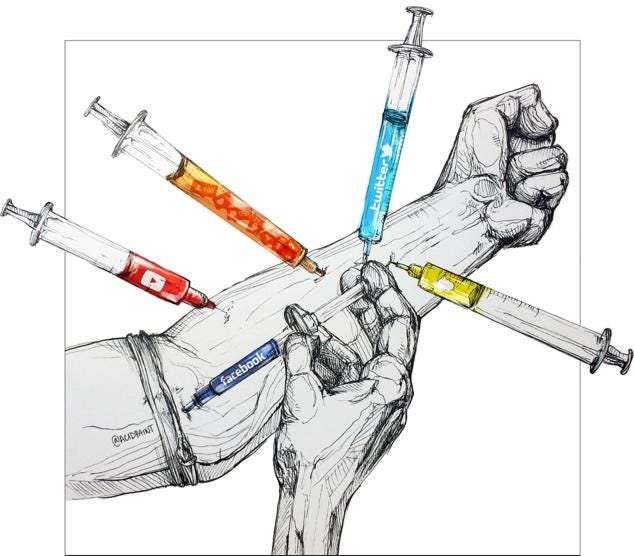
But what almost nobody talks about is that this taps into primal tribal wiring. Your brain has a hard time separating digital reality from actual reality—if it could, you wouldn’t get scared watching horror movies.
Getting attention, followers, and engagement doesn’t just feel good. It raises your status. It moves you higher in the social hierarchy, which fundamentally changes how your brain operates. This is explored in The Winner Effect: The Neuroscience of Success and Failure—winning and moving up literally rewires your thinking.
When you rise in status, your brain stops operating from scarcity. You think more clearly. You make better decisions. You feel safer. In evolutionary terms, higher status meant better food, more security, higher survival odds. Your position in the hierarchy is still directly connected to your level of existential anxiety.
So attention isn’t just about dopamine hits. It’s a direct survival mechanism. Your brain interprets social proof as safety, as belonging, as moving away from the danger of exile.
This is why the trap works so well: you’re not just chasing likes. You’re chasing the feeling of not being in danger and feeling good.
When Success Attaches to Identity
Once you get traction—followers growing, money coming in, people recognizing you—something dangerous happens. You start forming an identity around it.
And this is where people get fucked.
As mentioned right at the beginning, I learned this the hard way. I was successful doing M&A deals worth millions, so I convinced myself I understood business better than most people. Started a consultancy. It went nowhere for 2.5 years, but I kept going because stopping would mean admitting I was wrong, that maybe I didn’t understand business the way I thought I did.
I ended up in the hospital on the operating table, almost dead from stress.
Now, when something isn’t working, it takes me about a day of feeling like shit, then I move on. I’m not attached to being “the guy who knows business” anymore. I’m just trying to figure out what actually works and building cool things.
This is why course correction becomes nearly impossible for most people. When you build success on a shaky foundation, when your identity gets wrapped up in a particular version of yourself, changing direction means destroying who you think you are. That’s not a business decision anymore—it’s an existential crisis.
Paul Graham nailed this in his essay “Keep Your Identity Small.” The more you tie your identity to specific positions or roles, the harder it becomes to think clearly or change course. Every challenge to your approach feels like a challenge to your existence.
(Amazing short essay btw, I highly recommend reading it)
Which leads directly to the second part of the trap.
Part 2: The Lock (Why You Can’t Escape)
Your Brain Is Wired Against Change
Once you’ve built something—an image, a reputation, a “thing that works”—your brain becomes deeply reluctant to change it, even when it stops working, even when it’s slowly destroying you.
Why?
Because your brain isn’t optimized for growth. It’s optimized for efficiency and survival. From an evolutionary perspective, consistency meant staying alive:
Same path to water = no predators
Same food sources = no poison
Same behavior in the tribe = group acceptance, not exile
Changing patterns meant risk. Risk meant potential death. So our brains developed a powerful bias: keep doing what hasn’t killed you yet.
This wiring didn’t disappear when we moved into modern life. It just found new applications:
Staying in jobs that drain you because switching feels dangerous
Playing roles that no longer fit because change threatens your identity
Creating content you’ve outgrown because it still gets engagement
The pattern feels safe even when it’s slowly killing you.
The Social Reinforcement Loop
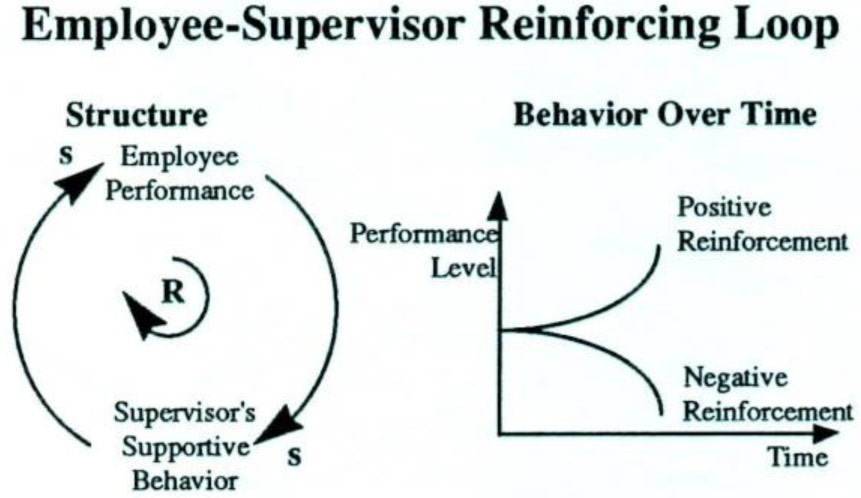
Your brain craves consistency. But here’s what makes escape nearly impossible: everyone around you craves it too.
People get used to you being “the funny one,” “the serious entrepreneur,” “the fitness person,” “the one who always has their shit together.” They file you away in their mental model of the world.
And when you try to shift? They push back.
Not because they want to hurt you. Because your change forces them to update their model of you, and that takes effort. Worse, your growth can feel like an uncomfortable mirror. If you can change, it proves change is possible—and that’s threatening to people who’ve convinced themselves it isn’t.
Your evolution challenges their excuses.
So parents, friends, colleagues—they resist. They make comments. They question your decisions. They remind you of “who you really are.” Sometimes consciously, usually not. They’re just trying to maintain their stable understanding of the world, and you staying consistent makes their world more predictable.
It’s not fully their fault, so do not be mad about it, but happy, because it means you are growing. If they did not complain, it would mean that, in reality, you are not truly changing.
Change the perception, and it will set you free.
Your brain interprets this resistance as social danger. Potential rejection. Loss of belonging. Wasted energy fighting upstream.
So you fold. You stay consistent. Not because it’s right. Not because the reasons you give yourself are true. But because staying the same feels safer than facing the combined weight of your own biology and everyone else’s expectations.
The Biology Working Against You
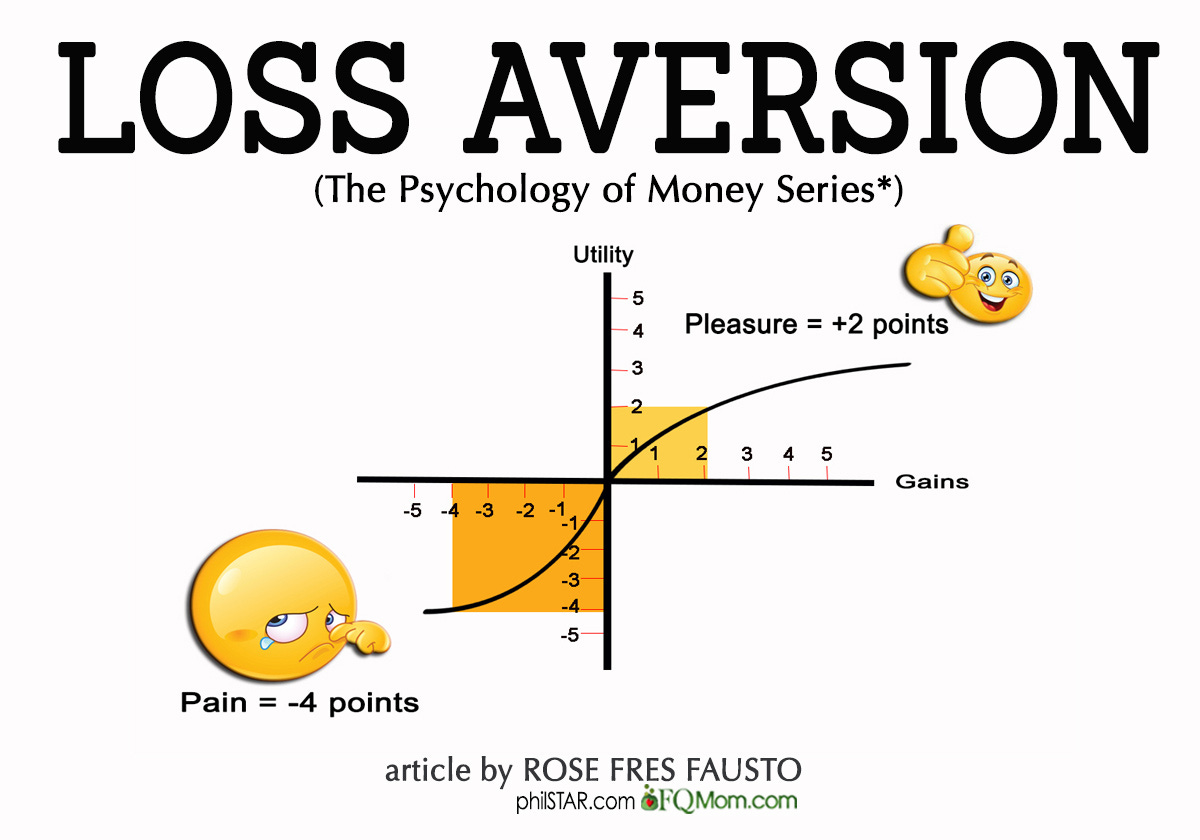
Two cognitive patterns make this trap even stronger: loss aversion and sunk cost fallacy.
Loss aversion is our tendency to fear losses more intensely than we value equivalent gains. Losing $100 feels significantly worse than gaining $100 feels good. Losing status, audience, income, identity—these losses feel catastrophic even when the gain on the other side might be bigger.
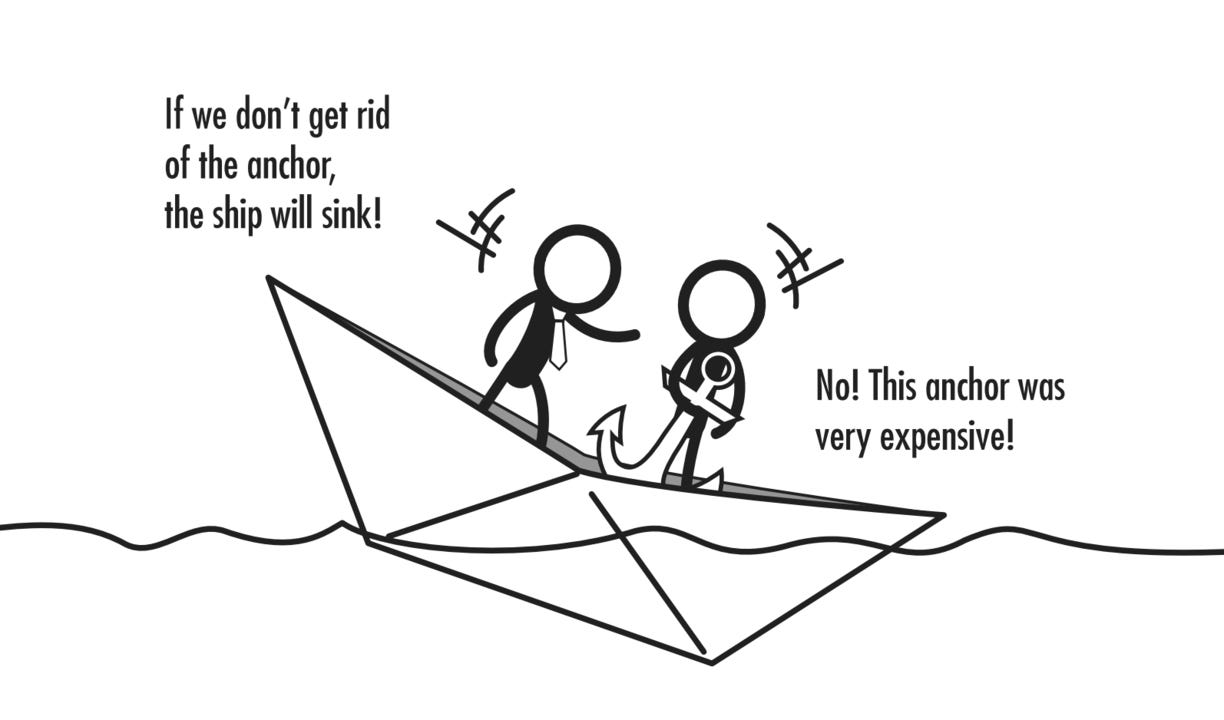
Sunk cost fallacy is when you keep investing in something because you’ve already invested so much, even when it no longer makes sense. You’ve spent three years building this audience, this reputation, this version of yourself. Walking away feels like wasting all that effort.
Combined with the status you’ve gained? Your brain will fight you at every level. It doesn’t want to lose the artificial sense of safety that social proof provides. It doesn’t want to abandon the investment. It doesn’t want to face the uncertainty of rebuilding from scratch.
So it convinces you to stay. To keep performing. To maintain the consistency that’s slowly suffocating you.
People like Elon Musk or successful serial entrepreneurs can start over repeatedly because their identity is tied to building and enduring suffering and building something that is bigger than themselves, to the vision, not to any particular success. Their core identity is “person who builds things from nothing because it is necessary,” so starting over doesn’t threaten who they are—it confirms it.
But most people’s identity is tied to the specific success they achieved, which makes pivoting feel like dying.
Part 3: The Escalation (Why It Gets Worse Over Time)
The Hedonic Treadmill
Here’s where the trap becomes a death spiral: hedonic adaptation.
People quickly get used to whatever level you’re operating at, then return to baseline. The excitement fades. The novelty wears off. What impressed them last month is just your new normal this month.
If your success depends on performance—always doing new things, entertaining people, staying interesting—you’re caught in an escalation cycle. Once you do something people love, you have a short window before it becomes their expectation. Anything below that new level feels boring, and you get punished for it.

So you escalate. Crazier content. More extreme positions. Bigger promises. Whatever it takes to recreate that initial spike of attention.

This is why you see creators who started with thoughtful content slowly shift to reaction videos, hot takes, and controversy. Why people who built audiences on substance end up doing whatever gets clicks. Why the girl posting normal photos eventually posts increasingly sexualized content, gets plastic surgery, and wonders where all the quality men went.
The algorithm rewards the escalation. The audience demands it. Your income depends on it. And your brain—still operating on that status/survival wiring—tells you that maintaining attention is maintaining safety.
The Performance Trap
If your income depends on eyeballs—how many people view what you do—the escalation trap is inevitable.
You haven’t built long-term equity with people. You haven’t created something that compounds in value regardless of whether you’re performing right now. You’ve built a machine that requires constant feeding, constant novelty, constant escalation.
Get boring? They leave. Stop performing? The algorithm buries you. Take a break? Someone else fills the space you occupied.
This is why playing the attention game eventually destroys most people who try it.
The game itself requires you to keep escalating until you either burn out, lose respect, or become someone unrecognizable.
The better approach? Get people used to a consistent format and stick with it.
Take YouTuber penguinz0—same camera angle, same monotone voice, no production. He’s built a loyal audience over the years by being reliably himself, not chasing trends.

Or Mariusz, a small-cap investor who just talks about stocks in low-production videos. His platform costs $3000 yearly, and people happily pay. When he tried performative videos for more views, it backfired badly.

But the consistent format can also build a certain personality, like a guy who always talks about new entertainment formats in a funny way. It does not have to be just doing the same thing. The key is creating consistent expectations, but with various outcomes or stories.
Why Nobody Just Stops
You know what’s worse than being trapped in this cycle? Success.
Because real success—the kind built on substance, skill, genuine value—is brutally hard. Jensen Huang, Nvidia’s founder, said it perfectly: “I wouldn’t do it again. Building NVIDIA turned out to be a million times harder than any of us imagined. If we had known the pain, vulnerability, and suffering we’d go through, I don’t think anyone in their right mind would ever start a company.”
When you’ve found a shortcut—when you’ve gotten attention, status, and income through performance and escalation rather than through building something genuinely valuable, your brain knows that the legitimate path is harder. Much harder.
You’re trapped between two impossible choices:
Keep escalating in the performance game until something breaks
Start over building the hard way, losing everything you’ve gained
Most people can’t stomach option two. The gap between who they are now and who they’d be starting over feels unbridgeable. The problem of now building it again, you now know how hard that is so your brain will do anything it can to convince you not to do it. So they stay on the treadmill, running faster and faster, hoping they can somehow make it work.
They can’t.
The Complete Trap
Let’s see the whole mechanism:
The Capture: Attention triggers your tribal status wiring → You feel safer, think better, get rewarded → You build an identity around this success
The Lock: Your identity becomes attached to this version of yourself → Your brain resists change (survival instinct) → Everyone around you resists change (their model of you) → Biology reinforces staying (loss aversion, sunk costs)
The Escalation: Hedonic adaptation means yesterday’s success becomes today’s baseline → You must escalate to maintain attention → The escalation becomes unsustainable → But quitting means losing everything and starting over → So you stay trapped
This isn’t a character flaw. It’s not a weakness. It’s a systematic mechanism that captures people who are trying to succeed, then makes escape progressively more expensive the longer they’re caught in it.
The question isn’t whether this trap exists. It obviously does—you can see it everywhere once you know what to look for.
The real question is: how do you avoid getting caught in the first place? And if you’re already trapped, what does escape actually require?
That’s what we need to talk about next.
SECTION 3: THE MCCONAUGHEY PRINCIPLE
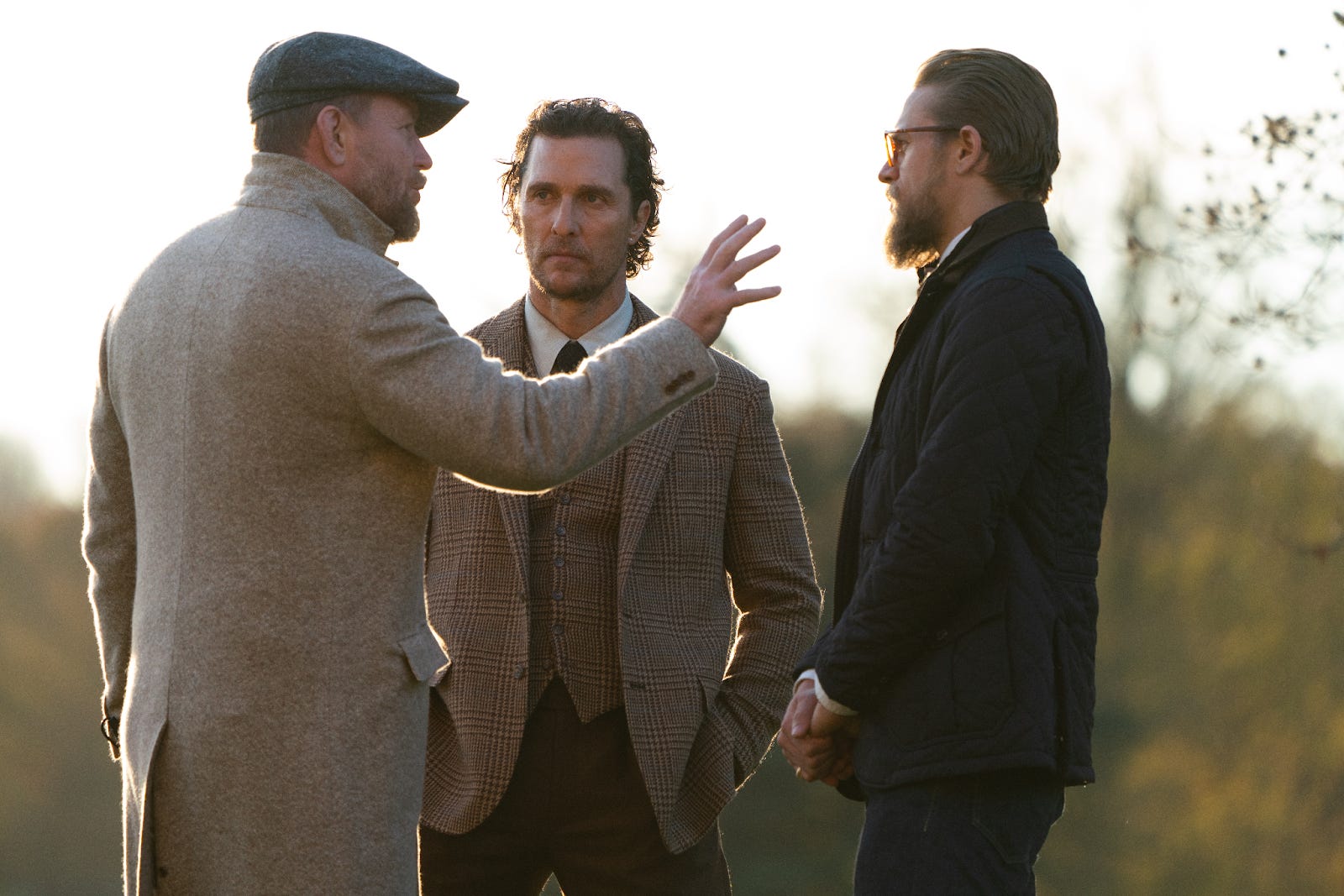
There was a time when Matthew McConaughey was stuck playing one role: the charming, shirtless rom-com guy. How to Lose a Guy in 10 Days, Failure to Launch, The Wedding Planner—same character, different title. Hollywood loved him like that. The paychecks were massive. And for a while, he loved it too.
But then something shifted. He wanted more. “I wanted to do work that challenged me,” McConaughey said in interviews. “But the industry only saw me one way.”
So he made a decision that looked insane from the outside: he stopped. Turned down a $14.5 million offer for another rom-com and disappeared from Hollywood for nearly two years.
“If I couldn’t do what I wanted, I wasn’t going to do anything,” he said.
No income. No spotlight. No guarantees that this gamble would work. Just the certainty that continuing down the same path would eventually kill whatever made him want to act in the first place.
That silence created space. He actively pursued roles that offered depth and complexity—The Lincoln Lawyer, Mud, Magic Mike, True Detective. Smaller paychecks initially. Less mainstream appeal. But actual characters instead of the same performance in different costumes.
Then came Dallas Buyers Club and the Oscar.
That wasn’t a comeback. It was a rebirth.
What This Actually Shows
McConaughey’s story illustrates something most people miss about breaking free from the consistency trap: the mechanism doesn’t break when you make a new choice. It breaks when you’re willing to lose everything the old choice gave you.
Status. Income. Identity. Audience. All of it.
He wasn’t just changing the type of movies he made. He was destroying the entire identity Hollywood had built around him—and that he’d profited from for years. He had to be willing to become nobody again before he could become someone new.
Most people can’t stomach that gap. The period where you’re neither who you were nor who you want to become. Where you’ve lost the old status but haven’t gained the new one. Where your bank account is draining and everyone’s asking if you’ve lost your mind.
That gap is where most people break and go crawling back to the consistency trap.
Why External Change Is So Hard
But here’s the piece that makes this even more complicated: it’s not just your internal resistance. The world around you has locked you into a pattern too.
McConaughey couldn’t just announce “I’m a serious actor now” and have everyone believe him. His existing audience wanted the rom-com guy. Casting directors saw him as the rom-com guy. His agent’s business model depended on him being the rom-com guy.
Everyone had filed him away in their mental model, and changing that model required more than just his decision to change. It required disappearing long enough that the old association weakened. It required proof through completely different work. It required time for people to forget who he’d been so they could see who he was becoming.
This is the external lock that reinforces the internal one. Your reputation becomes a prison. Your success becomes a limitation. The very people who benefited from the old version of you have incentives to keep you there.
Of course, there are different ways also how to approach it, but the article would be too long, and I wanted to point out sometimes how crazy it can be, so people can understand what is ahead of them a prepare for hardships.
The Consistency Principle in Action
McConaughey understood something that most people never figure out: you can’t evolve publicly without triggering massive resistance. You have to create enough distance from the old pattern that people can’t easily pull you back into it.
Two years of silence wasn’t just about finding better roles. It was about breaking the consistency expectation. About making the gap between old McConaughey and new McConaughey so wide that there was no gradual slide back into familiar territory.
If he’d tried to transition slowly—one rom-com, then one serious role, then another rom-com—he would’ve failed, or it would have taken a very long time. The pressure to return to what worked would’ve been too strong. His audience would’ve punished the serious attempts. His income would’ve stayed tied to the old pattern.
He had to make the break complete enough that going back wasn’t an option.
What This Requires
Let’s be clear about what McConaughey actually did, because most people romanticize this story without understanding the price:
He accepted complete uncertainty. No guarantee the serious roles would come. No promise that audiences would accept him in them. Just conviction that continuing the old path was worse than the risk of failing at something new.
He gave up massive money. $14.5 million is real wealth. Most people tell themselves they’d walk away from the wrong path, but when someone offers you life-changing money to stay comfortable, almost everyone takes it.
He endured social pressure. Everyone thought he was crazy. His agent probably fought him. His family probably questioned him. The industry wrote him off. He had to hold his position while everyone around him suggested he was making a catastrophic mistake.
He created space before filling it. He didn’t immediately jump into new work. He disappeared. Let the old identity fade. Gave himself room to figure out who he wanted to become without the pressure of maintaining who he’d been.
This is what breaking free actually costs. Not a mindset shift. Not a new strategy. A willingness to lose everything you’ve built and sit in the uncertainty of not knowing if you can build something better.
Most people aren’t willing to pay that price. Which is why most people stay trapped.
The Pattern That Repeats
You see this same principle in everyone who successfully breaks the consistency trap:
Dave Chappelle walked away from $50 million and Comedy Central fame because the success was destroying what he actually valued. Disappeared for years. Came back on his terms.
Artists who delete their entire catalog and start fresh under new names because the old identity was limiting their growth.
Founders who shut down successful companies because they’d outgrown what made those companies work in the first place.
The pattern is always the same: Complete break. Extended uncertainty. Willingness to lose everything. Only then can you rebuild on a foundation that actually fits who you’ve become.
There’s no gradual version of this. No way to slowly transition while maintaining your current status and income. The mechanism that traps you doesn’t respond to gentle pressure. It requires a violent break.
Which raises the obvious question: if escape is this expensive, isn’t the better strategy to never get trapped in the first place?
That’s exactly right. And that’s what we need to talk about next—how to build in a way that creates options instead of prisons. How to succeed without painting yourself into corners you’ll need McConaughey-level courage to escape from.
Because the real insight isn’t how to break free. It’s how to build foundations that don’t trap you to begin with.
SECTION 4: HOW THIS PLAYS OUT ACROSS DOMAINS
The consistency trap isn’t just an individual problem. It shapes how products evolve, how brands behave, and how entire companies get stuck in patterns they can’t escape. Understanding how it works at different scales shows you why building correctly from the start matters so much.
The Alex Hormozi Example
Alex Hormozi is one of the sharpest business minds creating content today. Runs portfolio companies, sells books, invests. His content was designed for small and medium business owners, and he was dominating that space with straightforward YouTube videos.
Then he started experimenting. Dating advice with his wife. Lifting content. Food videos. Highly produced, entertaining content about not having kids. All the stuff that gets engagement.
And it worked. Following grew. Engagement grew. Views grew.
Then he ran into a friend who said something that stopped him cold: “I loved your videos, but I guess you’re not making them for me anymore, so I stopped watching.”
That friend represented his entire target market. The entrepreneurs and business owners whose actual business he served.
Hormozi went back and analyzed the data. While engagement was up, his real business metrics—book sales, workshop applications, qualified entrepreneur leads—were declining.
He immediately stopped the lifestyle content and returned to business education.
What This Shows
Hormozi caught this early because he was tracking the right metrics. Most people don’t. They see follower counts going up and assume that means success, not realizing they’re building an audience that can’t buy what they actually sell.
This is the attention trap in microcosm: engagement metrics pushed him toward content that grew his audience but destroyed his business.
If he’d continued for another year, the problem would’ve been much worse. His reputation would’ve shifted from “business educator” to “lifestyle personality who talks about everything.” His existing audience would’ve left completely. His new audience would’ve expected the entertainment to continue.
He would’ve been trapped serving an audience that wanted something different from what his business provided. Success at the wrong thing, which is worse than failure because it feels like you’re winning while your foundation crumbles.
The key insight: Hormozi’s core identity was “person who builds and teaches business building.” So recognizing the misalignment and correcting course didn’t threaten who he was. It confirmed it.
Someone whose identity was tied to being popular, being an influencer, having a big following? They couldn’t have made that pivot. They would’ve kept chasing engagement even as their business died, because losing the audience would’ve felt like losing themselves.
How Products Get Trapped
Instagram and Facebook Messenger weren’t designed perfectly from day one. They evolved. But once they reached scale, they couldn’t just redesign everything overnight.
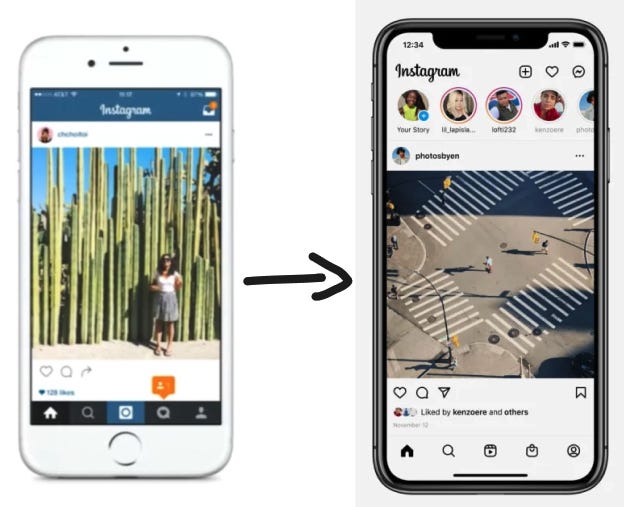
Why? Because users hate sudden change. It breaks their mental models. Creates friction. Forces them to think.
So what do these platforms do? Tiny, invisible updates. A button moves slightly. A feature shifts. A layout tweaks incrementally.
Over time—five years later—you open the app and think, “This feels completely different now.” But you never noticed it happening.
That’s not an accident. That’s a necessity. Once you’ve trained millions of people to use your product a certain way, changing it requires fighting the consistency trap at massive scale. Users will revolt against sudden changes. They’ll leave. They’ll complain. They’ll demand the old version back.
The platforms are trapped by their own success into evolving so slowly that users don’t consciously register the changes.
Brand Consistency as Strategy

Apple never discounts iPhones. Not during holidays. Not for Black Friday. Not ever.
Not because they couldn’t. Because doing so would shatter the mental model they’ve spent decades building: premium, untouchable, high-status.
The moment Apple starts playing the discount game, the entire perception collapses. People stop thinking “this holds value.” They start thinking, “if I wait, it’ll be cheaper.”
Even used iPhones hold value because of this consistency. Apple has trapped itself into a position where it cannot compete on price without destroying the foundation on which its entire brand rests.
This is consistency as a competitive advantage. But it’s also consistency as a constraint. Apple can’t suddenly decide to make a budget phone line the way Samsung can. Their brand won’t support it. Their audience won’t accept it.
They’ve built a prison of premium positioning. It’s a very profitable prison, but it’s still a prison.
The Strategic Insight
These examples show the same mechanism operating at different scales:
Individual level: Hormozi almost trapped himself with the wrong audience
Product level: Platforms can only evolve through invisible incremental changes
Brand level: Apple locked themselves into premium positioning permanently
In every case, early decisions create patterns that become progressively harder to change. Success makes the patterns stronger. Time makes them more rigid.
Which means the only real leverage point is at the beginning. Before you’ve locked in patterns. Before you’ve built an audience expecting specific things. Before your identity is attached to particular outcomes.
This is why how you start matters infinitely more than most people realize. You’re not just building a business or audience. You’re building the constraints that will govern every future decision you make.
Get it right early, and you build something that can evolve with you. Get it wrong, and you build a prison that gets stronger the more successful you become.
So how do you actually build right from the start? That requires understanding the price structure of every choice you make—which is what we need to map out next.
SECTION 5: THE PRICE STRUCTURE
Life operates on a brutal but simple principle: everything costs something. The tragedy isn’t that we pay prices—it’s that most people pay them unconsciously, discovering the real cost only after they’re locked into consequences they never saw coming.
Dan Millman captured this in The Way of the Peaceful Warrior: freedom isn’t the absence of consequences. It’s full consciousness of them before you choose. Most people make decisions like gamblers in denial, hoping for wins while remaining willfully blind to what they’re actually risking.
Real freedom comes from staring directly at every price tag before you commit.
Your Strengths Will Destroy You
Your greatest strengths eventually become your greatest weaknesses if you don’t evolve with circumstances. The trait that builds success in one context becomes the thing that sabotages you in the next.
The entrepreneur whose appetite for risk and lightning-fast decisions builds a startup discovers these same traits demolish the mature company that needs careful systems and patient planning. What got you here won’t just fail to get you there—it might actively destroy what you’re trying to build.
I have a friend who’s exceptionally good at attracting women. His effortless charm and magnetic confidence make him irresistible initially. Women are drawn to how he makes conversation feel easy, how he makes them feel like the most important person in the room, his fearless approach to connection.
But these exact qualities poison every relationship. The spontaneity that was thrilling becomes unreliability she can’t plan around. The confidence that attracted her becomes arrogance that dismisses her concerns. The social magnetism that made her feel chosen makes her feel like another audience member in his ongoing performance.
He’s trapped by his own gifts. The hidden price of surface-level magnetism: a string of relationships that burn bright and die fast, leaving him wondering why he can’t find someone who appreciates who he “really” is.
But this is who he really is. He just never calculated the full cost of being that person.
Consider the perfectionist whose exacting standards drive exceptional work but paralyze them from shipping anything unless it’s flawless. Or the people-pleaser whose agreeableness makes them beloved in small teams but useless as leaders who must sometimes disappoint people to serve larger goals. The workaholic whose dedication builds career success while destroying their marriage, health, and relationship with their children.
Each pays the price of strength taken too far, unexamined in new contexts.
The Misalignment Detective
The most dangerous lies are the ones you tell yourself. And the most expensive blindness is to the gap between your declared values and your revealed priorities.
Words are performance. Actions are truth.
Your calendar, bank statements, attention patterns—these documents don’t lie. They show what you actually value, regardless of what you claim to value.
When someone says family matters most but works 80-hour weeks for money they already have enough of, their schedule tells the real story. When they claim to want financial freedom but finance a lifestyle requiring them to stay trapped in jobs they hate, their spending reveals their actual priorities. When they talk about wanting deep relationships but spend free time scrolling instead of calling friends, their behavior votes against their stated desires.
This misalignment isn’t just hypocrisy. It’s systematic self-sabotage.
You can’t reach a destination when your internal GPS says “family time” but your feet walk toward the office every weekend. You can’t build wealth when your mouth says “financial independence” but your hands reach for every new status symbol.
The price of this unconscious living is perpetual frustration: working incredibly hard but never arriving where you think you want to go. Busy but not effective. Active but not progressing. Paying the cost of effort without receiving the reward of alignment.
Most people avoid this audit because they’re terrified of what they’ll find. They suspect their actions reveal priorities they’re not proud of—that they care more about appearing successful than being fulfilled, more about comfort than courage, more about being liked than being respected.
But this avoidance costs them their one life, spent in service of values they never consciously chose.
The Price of Conscious Choosing
When you’re considering that promotion, you’re not just choosing more money and prestige. You’re also choosing longer hours, increased pressure, potentially less time with family, the weight of greater responsibility, possibly becoming the kind of person who makes decisions that disappoint people you care about.
When you see all costs upfront, you can decide if the total package aligns with who you want to become.
Without this clarity, you’re not making choices—you’re reacting to opportunities and hoping the bill never comes due.
It always does.
Charlie Munger’s approach to debate exemplifies this principle. He doesn’t just prepare his arguments—he becomes his own opposition’s most informed critic. Only when he can argue against himself better than his opponent can does he truly understand what he’s defending.
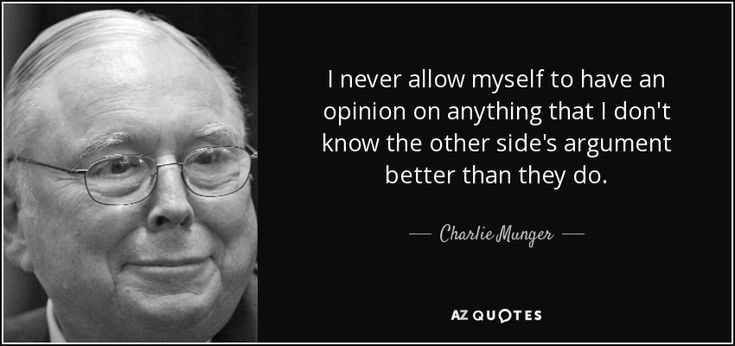
This isn’t intellectual honesty for its own sake. It’s strategic wisdom born from understanding that you can’t navigate successfully through terrain you refuse to map.
Munger knows the price of entering any debate unprepared isn’t just losing the argument—it’s looking foolish, damaging reputation, potentially making decisions based on incomplete information. So he pays the upfront cost of rigorous preparation to avoid the much steeper price of public failure and poor judgment.
The same principle applies to every significant choice: career moves, relationships, lifestyle changes, business ventures.
The question isn’t whether you’ll pay a price. You always will. The question is whether you’ll pay it consciously, as the calculated cost of getting what you truly want, or unconsciously, as the surprise tax on your self-deception.
Most people choose the surprise tax because they’re afraid that conscious choosing will reveal that what they want costs more than they’re willing to pay. But this fear costs them everything: they end up paying prices they never agreed to, for outcomes they never truly wanted, becoming people they never intended to be.
Examples of Hidden Prices

The “successful but miserable” trap: You optimize for external markers—title, salary, reputation—without asking if those markers align with how you actually want to spend your days. The price reveals itself years later when you realize you’ve built an impressive career doing work that drains you.
The “cheap money” trap: You take income doing work you don’t respect because it’s easier than building something legitimate. The price: you spend that money frantically on things you don’t need, trying to wash away the taste of inauthenticity. Several psychologists have observed this pattern—when your income feels dirty, you end up spending it on stupid shit just to make yourself feel better.
The “wrong audience” trap: You build a following serving people you don’t actually want to serve because the growth feels good. The price compounds: wrong clients refer more wrong clients. Your reputation crystallizes around work that doesn’t represent who you are, making it progressively harder to pivot toward what you actually want.
The “attention addiction” trap: You optimize for engagement metrics rather than building genuine value. The price: you become dependent on performing for an audience that will abandon you the moment you stop entertaining them. No equity. No compounding. Just an endless treadmill that gets faster every year.
Each of these traps is easy to fall into because the costs are delayed. They don’t bill you immediately. You discover them later, usually after you’re too invested to walk away without losing everything.
The Compound Cost
The most expensive part isn’t the initial price. It’s how costs compound over time.
Wrong decisions don’t just cost you once. They reshape your opportunities, your reputation, your skills, your network—everything that determines what options you’ll have in the future.
Take the wrong job, and two years later you have wrong-job experience, wrong-job connections, wrong-job skills, and a resume that tells a story about who you are that isn’t accurate. Changing direction now costs more than it would’ve cost before you started.
Build the wrong audience, and three years later you have wrong-audience reputation, wrong-audience referrals, wrong-audience income streams, and a brand that makes it nearly impossible to attract the right audience without starting completely over.
Marry the wrong person, and a decade later you have shared assets, children, intertwined families, and a life that requires dismantling everything you’ve built together to escape.
This is why early decisions matter so much. Not because they’re harder to change technically, but because the costs of changing them compound over time. The longer you wait, the more expensive the pivot becomes.
Conscious vs. Unconscious Prices
There are two types of prices in life:
Conscious prices: You see them clearly, decide they’re worth paying, and pay them intentionally. These feel hard but clean. You’re suffering for something you chose, which makes the suffering meaningful.
Unconscious prices: You stumble into them, discover them too late, and spend years paying for decisions you never consciously made. These feel like betrayal because you never agreed to them.
The work of building a good life is moving as many prices as possible from the unconscious category to the conscious one. Looking at every major choice and asking: “What is this really going to cost me? Not just money and time, but identity, relationships, health, peace of mind, future options?”
Most people avoid this work because honest answers are uncomfortable. Conscious choosing means admitting that what you want might cost more than you’re willing to pay. It means saying no to opportunities that look good but don’t actually fit. It means accepting limitations and tradeoffs instead of pretending you can have everything.
But unconscious choosing costs infinitely more. It costs you your life, spent paying bills you never saw coming for purchases you never consciously made.
The Real Question
The question isn’t whether you’ll pay prices for your choices. You will, always.
The question is: Will you pay them consciously, understanding what you’re getting in exchange? Or unconsciously, discovering years later that you’ve been paying for something you never actually wanted?
Every choice you make is a price negotiation with your future self. Most people never look at the contract before signing. They just hope it works out.
That hope is expensive.
SECTION 6: STRATEGIC PREVENTION
If you don’t have a clear vision for yourself, you become part of someone else’s vision for you.
You’ll unconsciously optimize for other people’s definitions of success, other people’s approval, other people’s money—until one day you wake up trapped in a life that fits you like a borrowed suit.

This isn’t just philosophical. It’s practical survival.
Because once you become known for something, once you build an audience around a particular version of yourself, changing direction becomes exponentially harder. Your reputation becomes your prison. Your success becomes your limitation.
The time to figure out who you are is before you become well-known for being someone else.
Know Yourself Before the World Defines You
Start with brutal self-analysis. What are your actual skills, not the ones you think you should have?
What personality traits do you genuinely possess, not the ones that look good on paper? What are your unfair advantages—the unique combinations of experience, perspective, and ability that only you bring?
Where does your energy naturally flow? What kind of work energizes you versus drains you? How do you authentically like to look, talk, move through the world?
This isn’t about personality tests and LinkedIn buzzwords. It’s about understanding your core operating system so you can build a life that runs on your natural fuel instead of fighting against your grain every day.

Most people skip this step. They see what’s working for others and try to replicate it. They optimize for external metrics before understanding their internal wiring. Then they wonder why success feels hollow or why they burn out in the long run despite doing everything “right.”
When you engage with trends, use them as communication methods, not as your core identity. If you’re naturally analytical and introverted, you can package your insights using current formats and platforms without pretending to be an extroverted entertainer. The trend is the wrapper. Your authentic value is the gift inside.
Choose Your Audience Like You’d Choose a Spouse
Here’s what almost nobody figures out intentionally: you become like the people you serve.
I haven’t seen anyone talk about this.
Your audience doesn’t just consume your content—they shape your character, your opportunities, ultimately your life. To create for them, you need to think about what they want, what they respond to, what problems they have. And you become what you think about consistently.
Choose them as carefully as you’d choose a spouse, because in many ways they’ll have more influence over your daily existence.
I know a Slovak singer who makes excellent money creating children’s music. The problem? He despises kids. Every song he writes, every performance he gives, every interaction with young fans must feel like a betrayal of his soul. The money is good, but it’s contaminated money—earned by being someone he fundamentally isn’t. He spends it frantically on expensive things, trying to wash away the taste.
The same pattern destroys OnlyFans creators who build massive followings serving audiences they actually despise. They perform intimacy for strangers they can’t stand, fake desire for people they find repulsive, pretend to be aroused by interactions that make their skin crawl. The money flows in, but so does the self-loathing.

When your income feels dirty, you end up spending it on stupid shit just to feel better. The money becomes contaminated by how you earned it, and no amount seems worth the spiritual price.
At least, not for me.
The Compound Cost of Wrong Audiences
Wrong audiences don’t just drain your energy—they multiply themselves. Clients you don’t want to work with refer more clients you don’t want to work with. Followers who engage with content you hate encourage you to make more content you hate. Your reputation crystallizes around work that doesn’t represent who you are, making it progressively harder to pivot toward what you actually want.
This trap usually starts with survival: you need money, so you take any client who can pay. But what begins as a temporary compromise becomes permanent character. Those clients shape your brand, your referrals, your daily experience. Before you realize it, you’ve built a successful business you actively resent.
The Mirror Effect
Over time, you absorb the characteristics of the people you serve. If your clients are entitled and demanding, you develop those traits. If your audience is negative and cynical, that energy seeps into your worldview. If your customers accept low-quality work, you start accepting low-quality work from yourself.
This isn’t mystical—it’s practical psychology. You adapt to your environment, and your audience is a major part of your professional environment. Their language becomes your language. Their problems become your focus. Their values influence your decisions.
Choose your audience partly based on who you want to become. If you want to be more disciplined, serve people who value discipline. If you want to think bigger in a sustainable way, work with clients who operate at scale. If you want to stay optimistic, avoid building a brand that attracts chronic complainers.
The Quality vs. Quantity Decision
Most people optimize for metrics that don’t matter: reach instead of resonance, followers instead of fans, attention instead of respect. They choose quantity over quality because it feels like progress, but it’s often progress in the wrong direction.
The content that generates maximum reach—outrage, controversy, surface-level trends—usually attracts the wrong audience for long-term success. You can get millions of views reacting to trending topics, but what kind of business can you build on an audience that’s only interested in your hot takes on this week’s drama?
If you want clients with depth, resources, and respect for quality work, you can’t build your brand just on shallow, reactive content. You need to create work that demonstrates the thinking and expertise those clients value, even if it grows more slowly.
The strategic approach: create high-quality, substantial content that showcases your real capabilities, then extract short-form, trend-based content from that foundation. Lead with substance, follow with attention-grabbing formats. This way, people who discover you through trending content can find the deeper work that qualifies you for better opportunities.
The question isn’t whether quality or quantity is “better”—it’s which game you can win while staying yourself.
Build on Timeless Foundations
Trends change. Algorithms shift. Platforms die. But skills, perspective, and genuine expertise compound forever.
Your core identity should be built on timeless elements—your actual capabilities, your way of thinking, your values—rather than temporary trends. Trends should influence how you communicate, not what you fundamentally stand for.
The TikTok dancer who wants to become a business owner has no bridge between identities. The political commentator, tired of the outrage cycle, has no clear next move. The lifestyle blogger whose life circumstances changed has no foundation to build from.
If your brand is completely dependent on fleeting trends or narrow niches, you have no exit strategy. You’re trapped serving whatever’s working right now, with no path forward when it stops working.
The Exit Strategy Everyone Ignores
Most people build their entire professional identity on foundations that won’t last, with no plan for what happens when they want or need to change direction.
The sustainable path is choosing your direction consciously, then staying consistent long enough for compound interest to work. This requires saying no to appealing distractions, easy opportunities, and audiences that don’t align with your vision. It means doing the same essential work, in the same general direction, for long enough that you become genuinely excellent at something meaningful.
The payoff isn’t just professional success—it’s the deep satisfaction of building a life that actually fits who you are. Where your work energizes instead of drains you. Where your audience appreciates the real you instead of a performance. Where your reputation reflects your authentic capabilities and values.
Without this intentional vision, you’ll drift into someone else’s plan for your life. You’ll optimize for their metrics, serve their goals, become who they need you to be. You’ll be successful at being someone else, which is the most sophisticated form of failure.
The question isn’t whether you’ll have a vision—it’s whether it will be yours or theirs.
SECTION 7: WHAT THIS ACTUALLY COSTS (A Case Study)
Writing advice about living authentically is easy. Following it when the bills are due and the world is pulling you in different directions—that’s the real test.
I don’t just write these ideas. I’ve built my life around them. And I want to show you what that actually looks like, not as justification, but as a case study in what these principles cost when applied in practice.
The Self-Analysis Tax
I’ve changed jobs, sectors, and positions more than most people consider rational. But each transition was deliberate. Every time I left a position—or got fired from one—I spent weeks analyzing what I loved about the work, what drained me, why those reactions occurred, and what I wanted to learn next.
This level of self-examination is exhausting. I’ve taken every personality test I could find, visited advisors from conventional career counselors to uncomfortably spiritual guides, spent countless hours dissecting my motivations and reactions.
This is the compound cost of optimization. I’ve traded comfortable ignorance for constant self-examination. Most days it’s worth it. Some days I’m not sure. But I know what the alternative costs: I’ve watched more than 90% of the people I meet live lives they don’t truly love, or worse, lives they actively resent.
That terrifies me more than the occasional paralysis from over-analysis.
The price: Mental energy, time, sometimes feeling like you’re never satisfied because you’re always questioning.
The payoff: Each transition gets me closer to work that actually fits. The gaps between “this is wrong” and “I need to leave” get shorter. The recovery time from failures shrinks.
Long-Form in a Short-Form World
I write long-form analysis in the age of TikTok. Most people don’t have time to read 8,000-word pieces. The reach is a fraction of what shallow, reactive posts would generate.
But I love this work. Writing these pieces is therapeutic—it helps me process ideas, connect disparate thoughts, clarify my thinking. More importantly, it’s sustainable. I’ve tried creating low-quality, triggering content that performs well on social media. Got sick of it quickly.
As Naval Ravikant said: “Find what feels like play to you and work to others.” This is one of the few ways to win long-term while living a satisfying life.
When I sit down to write for three hours, it doesn’t feel like work. When I was churning out hot takes and trending commentary, every minute felt like torture.
The price: Slower growth, smaller audience, less immediate validation, sometimes wondering if I’m making the right call when I see others gaining followers faster.
The payoff: Work that energizes me. Clients and readers who actually understand what I’m trying to do without me dumbing it down. A body of work I’m proud of rather than embarrassed by, even years later.
This is choosing audience over reach. I write for people who think in systems, not soundbites. That limits my growth but maintains my sanity.
The best way is, of course, to do both, but this is where having a team is the most feasible idea.
Turning Down Contaminated Money
The real test comes when you’re broke and someone offers you money to compromise your principles.
I’m skilled at behavioral insights, manipulation of behavior, and understanding human decision-making, which means I regularly get approached by casinos and betting companies. The money used to be tempting, especially when you could barely afford groceries.
A few years ago, I couldn’t find work I wanted, was running out of savings, and got an offer for 2.5 times my normal salary working on high-frequency trading products. They needed someone who understood systems but had behavioral intuition.
I knew I’d be bored. I knew I wouldn’t love it. I knew it would feel like selling my soul for a paycheck.
So even in my worst financial period, I said no.
People close to me thought I’d lost my mind. “Just take the money and figure it out later.”
The price: Seven months of financial stress. Uncertainty. Social pressure. Watching my savings drain while wondering if I’d made a catastrophic mistake.
The payoff: Three weeks after I turned down that offer—seven months after I started looking—I found work with a company I actually trully enjoyed. More importantly, I didn’t have to spend years doing work I hated while trying to reverse the career trajectory that a wrong choice would’ve created.
This is what loss aversion looks like when you override it. My brain was screaming to take the money. I knew the price would be hating my work. Seven months of financial stress versus years of soul-dead employment. I chose the shorter suffering.
The worst lie, people think you can do both. But that’s for another day.
The Boundary Tax
I’ve told myself I’d rather live alone than be disrespected. This applies to friends, family, romantic relationships, and professional situations. I don’t tolerate people crossing serious lines, even when maintaining those boundaries costs me relationships or opportunities.
The paradox: Setting these standards has actually led to deeper relationships. When you’re clear about what you will and won’t accept, you attract people who respect boundaries. You repel those who don’t. The quality increases dramatically.
The price: Some relationships end. Some opportunities close. Sometimes you sit alone wondering if your standards are too high.
The payoff: Every relationship I have now is based on mutual respect. I don’t spend energy managing people who drain me. The cost of enforcing boundaries feels much lower than the cost of tolerating disrespect would have been.
The Pattern
Warren Buffett’s acquisition of Nebraska Furniture Mart from Rose Blumkin in 1983 became legendary for how it was sealed—with a handshake. No due diligence, no financial audits, no legal paperwork. Buffett asked her price, she told him, they shook hands.

Mrs. B was 89, continued running the business for years after the sale, and the handshake deal became one of Buffett’s most profitable investments. It perfectly embodied his philosophy that when you find people of integrity, complicated agreements become unnecessary.
When you’re willing to sacrifice present comfort for future alignment, when you consistently choose authenticity over convenience, when you refuse to compromise core values even when it’s expensive, the world eventually reorganizes around your integrity.
But it might take significantly longer.
Every major sacrifice I’ve made for future alignment has paid off, usually in ways I couldn’t have predicted. Turning down quick money led to better opportunities. Ending relationships that didn’t serve me made space for ones that did. Choosing difficult but meaningful work over easy but empty work built skills and a reputation that continue to compound.
But at that moment, it is not as easy and glamorous as it sounds.
What This Actually Looks Like
This isn’t about being stubborn or precious. It’s about recognizing that short-term discomfort is often the price of long-term satisfaction.
Most people optimize for immediate relief—they take the job that pays now, enter the relationship that’s convenient now, build the audience that grows now. But these quick fixes often become long-term traps.
The periods of uncertainty, financial stress, and social pressure to compromise have always preceded the most meaningful breakthroughs. Not because the universe rewards patience, but because staying focused on what I actually wanted instead of taking the first exit from discomfort eventually led to finding what I was looking for.
The life I’m building by following these principles isn’t always glamorous, but it’s genuinely mine. The work energizes me. The relationships fulfill me. The challenges feel worth facing.

That’s the difference between writing advice and living it. Anyone can type inspiring words about authenticity and alignment. Living by those words when the world is pulling you in other directions—paying the actual prices these choices require—that’s where theory meets reality.
SECTION 8: CLOSING
Most people reading this won’t change anything.
They’ll nod along, feel briefly motivated, recognize the patterns in their own lives—then go back to optimizing for metrics that don’t matter and serving audiences they don’t respect.
Why?
Because change requires losing your current status before you gain a new status.
That gap—where you’re neither who you were nor who you want to become—is where most people break. The biology, the social pressure, the sunk costs, the loss aversion—all of it conspires to keep you exactly where you are.
The mechanism I’ve laid out isn’t secret knowledge. It’s obvious once you see it. You probably recognized yourself in multiple examples. You know people trapped in every variation of this pattern.
The hard part isn’t understanding the trap. It’s being willing to lose everything you’ve built to escape it.
The Question You Need to Answer
Here’s what you need to figure out:
Are you building a life that fits who you are, or are you becoming whoever your current success requires you to be?
Because five years from now, the gap between those two versions of yourself will either be closing or becoming unbridgeable. Every day you spend optimizing for the wrong things makes the real you harder to find. Every audience you build around a performance makes authenticity more expensive. Every identity you attach to temporary success makes evolution feel like death.
Most people discover this too late—after they’ve built impressive careers doing work that drains them, after they’ve attracted audiences that expect performances they’re tired of giving, after they’ve become successful at being someone they never actually wanted to be.
The McConaughey move—walking away from $14.5 million and two years of uncertainty—sounds romantic in retrospect. But most people facing that choice take the money. They tell themselves they’ll figure it out later. They convince themselves that the discomfort is temporary.
It’s not temporary. It compounds.
What Actually Matters
The principles in this piece aren’t complicated:
Know yourself before the world defines you
Choose your audience as carefully as a spouse
Build on timeless foundations, not temporary trends
See every price tag before you commit
Be willing to lose everything to stay aligned
Simple to understand. Brutal to execute.
Because execution requires making choices that look insane to everyone around you. Turning down money when you need it. Walking away from success that’s working. Enforcing boundaries that cost you relationships. Sitting in uncertainty instead of grabbing the first comfortable option.
Most people aren’t willing to pay these prices. Which is why most people end up trapped.
The Real Price
You will pay a price for your choices. That’s guaranteed.
The only question is which price:
The price of building slowly and authentically, or the price of getting trapped in someone else’s definition of success?
The price of knowing yourself deeply, or the price of waking up at 50, realizing you’ve become a stranger?
The price of saying no to wrong opportunities, or the price of spending decades serving audiences you don’t respect?
The price of short-term uncertainty, or the price of long-term misery?
You’re choosing right now, whether you realize it or not. Every decision about what content to create, which clients to serve, what work to pursue, which opportunities to accept—these choices are building the prison or the foundation.
Most people drift into their prisons without noticing. The bars appear slowly, disguised as success. By the time they realize they’re trapped, escape requires McConaughey-level courage and sacrifice.
They succeed at playing a character, then get trapped maintaining that persona. The character becomes a cage with golden bars - financially rewarding but spiritually suffocating. They can’t evolve without potentially losing everything they’ve built.
Basically, selling your soul to the devil.
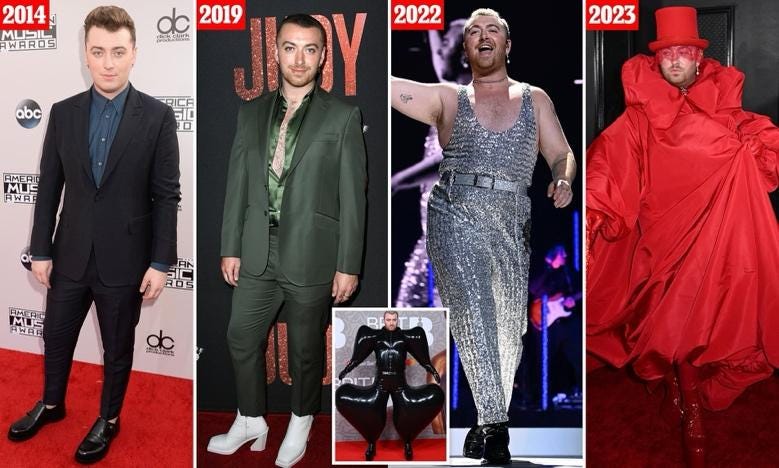
The alternative is building foundations that allow evolution from the start. Choosing alignment over growth. Quality over quantity. Authenticity over performance. Long-term integrity over short-term validation.
It’s slower. It’s harder to explain to others. The results take longer to materialize.
But it’s the only path that doesn’t require you to destroy yourself to escape what you’ve built.
So, which price are you willing to pay?
Because one way or another, you’re going to pay it.
— Peter
I’ll analyze where your business, content, or career is rewarding you for being the wrong version of yourself, and show you what it’s costing you.